This World Menopause Day we want to shine a light on some of the lesser known facts about menopause.
Annabelle Gauntlett started experiencing menopausal symptoms from the age of just 13, suffering from hot flushes, anxiety, low mood, brain fog, fatigue and insomnia. Annabelle was misdiagnosed for two years before she received an early menopause diagnosis at the age of 15.
Annabelle is on a mission to educate and normalise the conversation around menopause to help prevent others suffering needlessly. Here is Annabelle’s story in her own words…
I was standing in a clammy garden centre in the middle of summer with my grandma who was chaotically searching for the right flavour of boiled sweets when I felt my entire body start pulsating like a kettle about to reach boiling point.
“I’m having a hot flush, we need to leave!” I screeched. She immediately started laughing and told me not to be so ridiculous - after all, I was only 13. “You don’t get those until you’re in your fifties,” I vividly remember her saying.
She was wrong. And so were the countless medical professionals I saw in the years that followed, complaining of a debilitating list of symptoms.
Two years later, aged 15, following more GP visits and hospital trips than I care to remember, I was diagnosed with ‘premature ovarian insufficiency’. But let’s not be all fancy and call it what it is: early menopause. It’s not easy to describe all the emotions I felt after hearing those words. Part of me was scared of what it would mean for my future, of course… but there was also a huge part of me that was relieved that someone was finally taking me seriously having been brushed off and told I was ‘fine’ for so long. I blamed myself for being naive; I blamed them for gaslighting me.
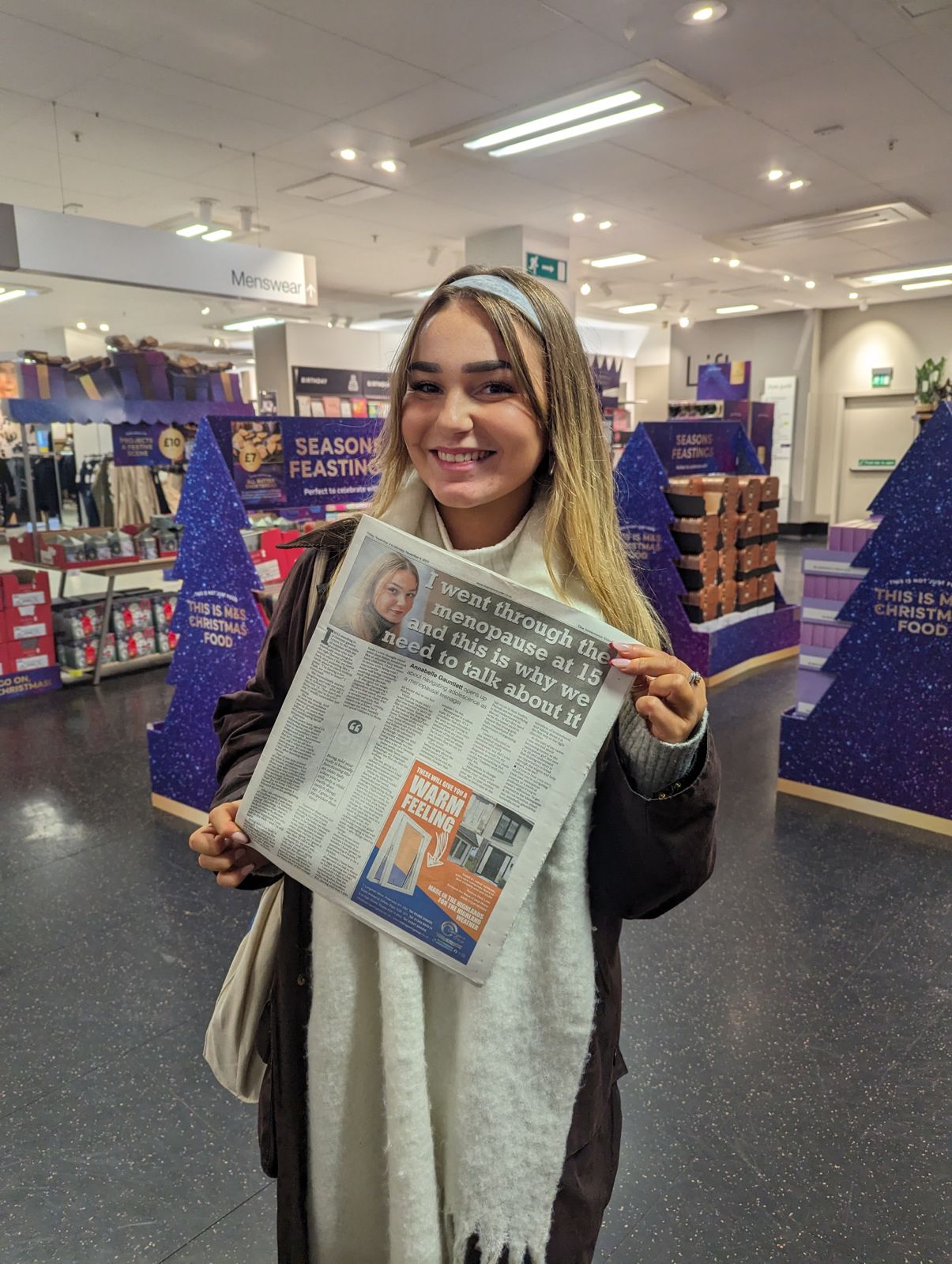
After an exhausting year of endless tests, I was soon told that I was in a ‘minority group’ (thrilling, I know!), which meant that, due to lack of research, doctors were unable to explain why this had happened. I was left in the dark - and I’m still here.
Being told your body is basically functioning like an older lady when you’re still only a child really does switch things up. I grew up a lot quicker than most. While my peers probably hadn’t even thought about what their future would look like or whether they would have children, I had to come to terms with being told I was infertile - something I know will bring constantly evolving emotions with each passing decade.
It also gave me magic powers, like becoming a chameleon through hot flushes that made me glow like a tomato in class; and a menstrual cycle that suddenly stopped coming… which was a blast for a teenage me who happily said good riddance to those.
Turns out these were just symptoms of my ovaries deciding that they’d had enough, and who can blame them to be honest; I mean, they used to have to listen to me yelling every month when they put me in such extreme agony, so I guess it was time to call it a day.
Suddenly my dad was having to look after his wife and daughter going through the dreaded ‘menopause’ together. For years he basically lived in a freezer as we would open the barn door of the cottage all winter due to our hot flushes. While my mum and I were human radiators, my dad was forced to layer up like an eskimo. Rather than a ‘beware of the dog sign’ in our house, it should have been ‘beware of the cold, if in need of warmth, heat your hands on the moody red ladies; hot flushes every 30-40 minutes.’ Although I must say with the recent energy crisis being constantly too hot has been a bit of a blessing.
Jokes aside, there have actually been some blessings: my diagnosis helped me find my love for writing. You see, going into school to announce I had early menopause caused quite the controversy. While my friends could discuss all the weird, wonderful and daunting changes happening during puberty, I had nobody to share my journey with. So I kept my feelings hidden away in a little pink book, which was where I wrote my story - one that would change the course of my life and open my eyes to a career in journalism, explains Annabelle who originally shared her story in The Inverness Courier.
On reflection, my childhood with my good old buddy menopause was quite challenging at times, which is why things need to change.
If there was more research invested in women’s health then I wouldn’t have grown up questioning if maybe I just wasn’t meant to be a mother. I wouldn’t have been diagnosed too late to freeze my eggs, leaving me unable to have a biological child. I wouldn’t have been humiliated in class for my hot flushes because of the lack of education. But, having said that, I also wouldn’t be me.
Menopause is a taboo topic for all ages. It’s a condition that shouldn’t be seen as something to be ashamed of. I was once isolated from my peers because of my diagnosis, but it isn’t until we share our stories that we are no longer alone.
Girls need to start being taught about the importance of their menstrual cycle and the potential changes that can occur in their bodies. Periods are not something to feel embarrassed to discuss - in fact they need to be discussed more to ensure that young girls fully comprehend the importance of regulating them.
I wasn’t educated on the medical implications involved with early menopause, nor did I even consider it would be my diagnosis as everyone made out it was something that couldn’t happen until your mid-forties. This needs to change.
Menopause does not belittle your value, whatever your age. It’s just another hurdle to overcome in the marathon of womanhood, and talking about it is the first step in the right direction.
At the start of my career I was worried about becoming known as the ‘menopause girl’, but now I’m 21 and understand that sharing my story is an opportunity to break through the stigma and help others.
Instagram: @_.annabellegauntlett